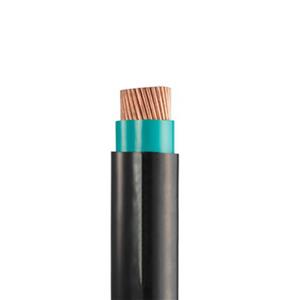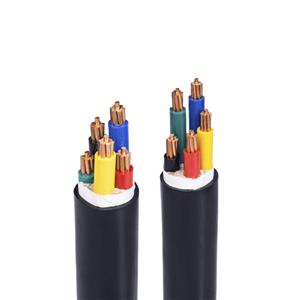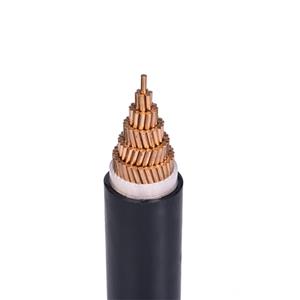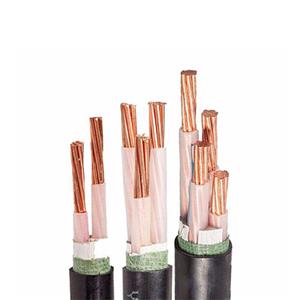
YJV cable is the first choice for charging pile cables
With the rapid iteration of the new energy vehicle industry, the construction of charging pile infrastructure in China has entered a stage of large-scale popularization. Whether it's home private charging piles, community public charging stations, or large DC fast charging stations in highway service areas and commercial districts, cables, as the core carrier of power transmission, directly determine the operational safety, efficiency, and service life of charging equipment. Among the many types of power cables, YJV copper core cross-linked polyethylene insulated cables have become the mainstream preferred solution for charging pile wiring due to their excellent safety performance, environmental adaptability, and cost-effectiveness. They are also a dedicated cable type explicitly recommended by industry standards.
According to the relevant standards of the New Energy Charging Facility Construction Specifications NB/T 33001 and GB/T 12706, YJV series cables should be given priority for the main power distribution lines of fixed charging pile installations, completely replacing traditional aluminum core cables and ordinary PVC cables, and gradually phasing out flexible wires and other cable products with poor adaptability. Currently, charging piles cover multiple power types, including 7kW household AC charging piles and 30kW and above commercial DC charging piles. During operation, they are characterized by continuous power supply, high current transmission, and complex environments, which places extremely high demands on the high temperature resistance, flame retardancy, aging resistance, pressure resistance, and wear resistance of cables. The product characteristics of YJV cables are precisely matched to the full-scenario usage needs of charging facilities.
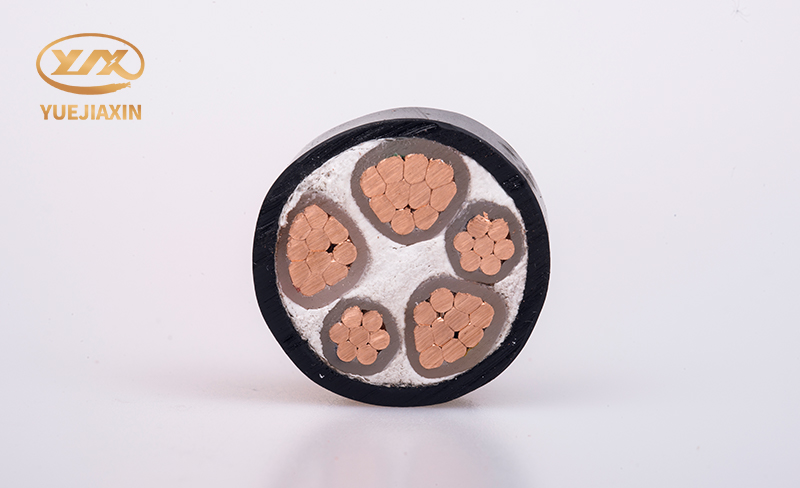
Safety and stability are the core advantages of YJV cables in enabling the operation of charging piles. Charging piles are constantly powered, and the high current transmission process easily generates heat. Ordinary cables have poor temperature resistance, and long-term high-temperature operation can easily lead to safety hazards such as insulation aging, leakage, short circuits, and even fires. YJV cables use cross-linked polyethylene insulation, with a standard temperature resistance of up to 90℃. Some upgraded products have even better temperature resistance. Compared to ordinary PVC insulated cables, their high-temperature resistance is significantly improved, effectively withstanding the temperature rise generated by continuous operation of the charging pile and avoiding safety accidents caused by high-temperature overload. At the same time, the mainstream ZR-YJV flame-retardant cable has excellent flame-retardant and self-extinguishing properties, effectively preventing the spread of fire in enclosed wiring environments such as garages and power distribution rooms, significantly reducing the fire safety risks of charging stations. YJV cables also excel in conductivity and operational stability. Compliant YJV cables use 99.99% high-purity oxygen-free copper conductors, with extremely low oxygen content and excellent conductivity. Compared to aluminum core cables, the conductivity is increased by over 60%, resulting in higher current carrying capacity and lower voltage loss for the same cross-section. In long-distance wiring scenarios for charging piles, YJV cables can effectively reduce transmission voltage drop, ensure stable voltage for charging equipment, and avoid problems such as slow charging, equipment tripping, and shutdown due to insufficient voltage. Meanwhile, the copper core material has strong oxidation and corrosion resistance, and the cable joints are not prone to loosening or oxidation, eliminating overheating problems caused by poor contact. This ensures long-term stable and uninterrupted operation of the charging pile, perfectly adapting to the high-frequency, all-weather charging operation needs.
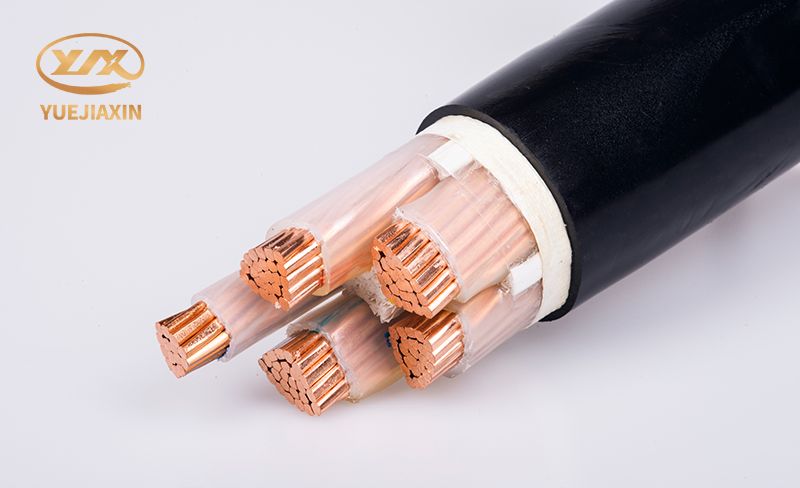
YJV cables possess exceptional environmental adaptability, making them suitable for charging pile construction across all scenarios. Current charging pile wiring scenarios are complex and diverse, encompassing various conditions such as underground damp garages, open-air outdoor stations, underground laying, and conduit wiring. Some scenarios involve harsh conditions including humidity, sun exposure, compression, and corrosion. YJV cables undergo special processing of their insulation and outer sheath, resulting in waterproofing, moisture resistance, sun exposure resistance, aging resistance, and high mechanical strength. They exhibit outstanding resistance to external compression, bending, and breakage, making them suitable for various complex indoor and outdoor installation environments. Compared to flexible cables like RVV, YJV rigid-core cables have a more stable structure, are less prone to deformation after installation, and will not experience problems such as cable loosening or insulation damage over long-term use. Their service life can reach over 20 years, far exceeding that of ordinary cables.
As the safety supervision system for charging piles continues to improve, the use of non-standard and inferior cables will continue to tighten. Safe, stable, durable, and cost-effective YJV cables will continue to dominate the charging pile wiring market. In the future, as the number of new energy vehicles continues to rise and the charging network becomes increasingly dense, YJV cables will leverage their irreplaceable product advantages to become a core supporting material for the construction of smart charging networks, laying a solid safety foundation for the high-quality development of the new energy industry.