Multi-strand Flexible Cables vs. Single-core Cables: How to Choose for Engineering Procurement?
In power engineering, construction electromechanical, and industrial equipment installation projects, cable procurement is the core link to control project quality, control cost, and ensure construction efficiency. Many procurement and engineering personnel often find themselves in a dilemma: with the same specification and voltage level, whether to choose multi-stranded flexible cables or single-core cables? There are significant differences between the two cables in terms of electrical conductivity, construction suitability, wear life, cost and later operation and maintenance. Wrong selection will not only increase construction difficulty and project costs, but may also lead to safety hazards such as heating, leakage, and line aging. Today, combined with practical engineering scenarios, we comprehensively dissect the advantages and disadvantages of the two cables and provide a purchase selection plan that can be implemented directly.
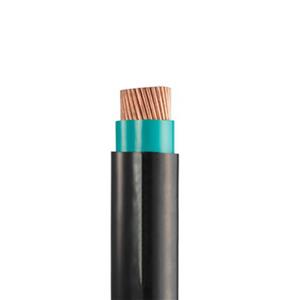
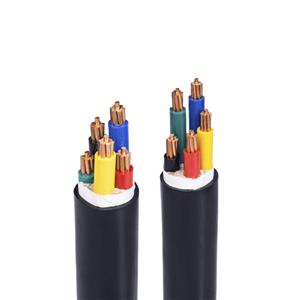
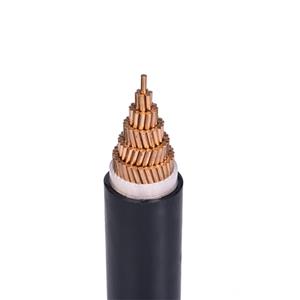
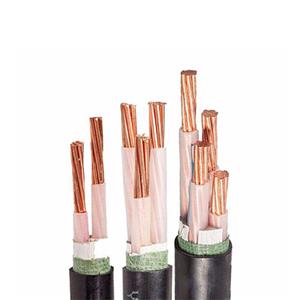
Common single-core cables include BV and YJV single-core models. The conductor is composed of a single solid copper/aluminum wire. The wire structure is compact, hard, has good formability, and the overall shape is regular and not easy to deform. It is the mainstream choice for traditional fixed wiring. Common multi-strand flexible cables include BVR and RV models, which are made of dozens of ultra-thin conductors. The wire body is highly flexible and can be bent at will. It has outstanding bending fatigue resistance and is suitable for complex and changeable wiring scenarios. The essential difference in structure directly determines the differential performance of the two in terms of electrical performance, construction characteristics, and service life, and is also the core basis for project selection.
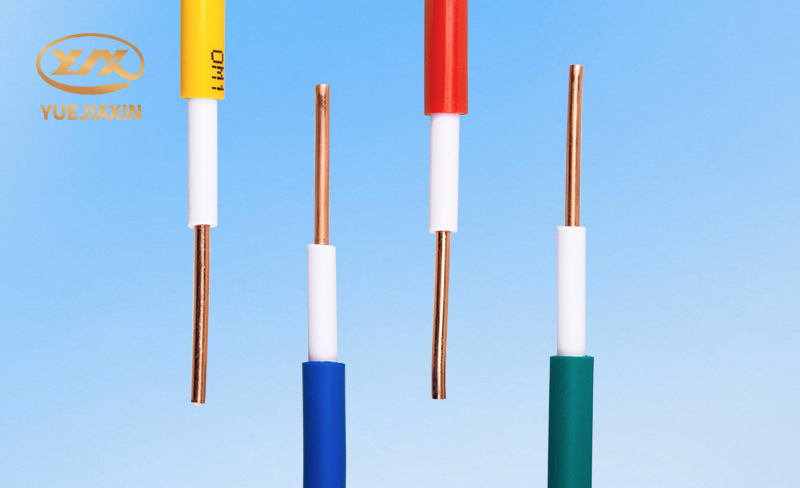
Electrical stability is a key criterion in cable selection. For a given nominal cross-sectional area, single-core cables feature compact conductors without internal gaps; this ensures uniform heat dissipation and superior current-carrying stability, making them ideal for fixed-line applications requiring continuous, long-term power supply. In contrast, stranded flexible cables—due to their multi-strand twisted structure—contain minute gaps between strands; this results in slightly lower heat dissipation efficiency and a higher temperature rise during prolonged full-load operation. However, the larger surface area of stranded cables offers superior conductivity efficiency in high-frequency current applications.
Single-core cables are rigid and lack plasticity; while they excel in straight, short-distance installations—offering neat routing and a clean appearance—they are difficult to bend in challenging environments. Scenarios involving dense conduit layouts, multiple turns, confined spaces, or frequent conduit threading pose difficulties; forced bending can damage the core or crack the insulation, significantly increasing labor costs and the risk of rework. Furthermore, single-core cables have poor resistance to vibration and tensile stress, making them prone to loose connections or core breakage in environments subject to equipment vibration.
The primary advantage of stranded flexible cables lies in their installation flexibility and high adaptability. Their pliable nature allows for easy routing around multiple corners, through complex conduit systems, and within cramped equipment interiors; this greatly enhances efficiency in conduit threading, cable routing, and embedded installations, thereby shortening project timelines. Additionally, they exhibit excellent resistance to bending, vibration, and tensile stress, making them suitable for applications involving mobile equipment, frequent vibration, or the need for fine-tuning cable positioning, while ensuring durability against core breakage and insulation cracking during long-term use.
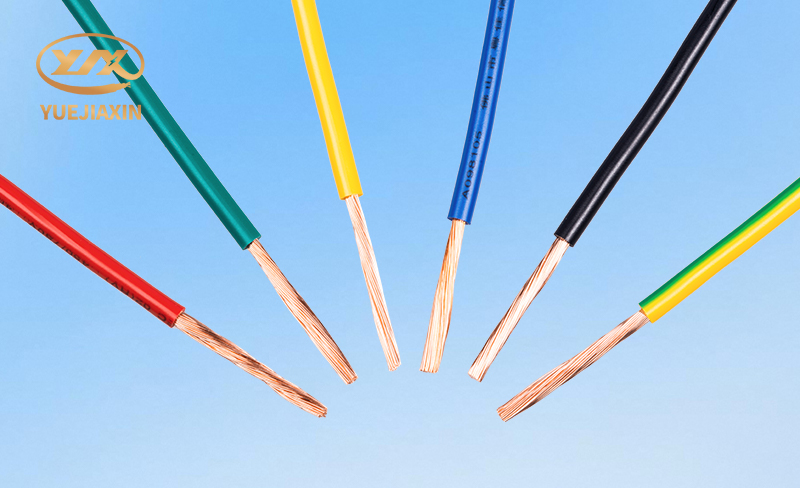
When procuring industrial cables, the key is finding the best fit for the specific application. Single-core cables offer stability, low cost, and ease of maintenance, making them a cost-effective choice for fixed backbone lines; conversely, multi-strand flexible cables excel in flexibility, durability, and low power loss, serving as the optimal solution for complex operating conditions and equipment connections. Procurement decisions should not be based solely on unit price or blind adherence to trends; instead, a comprehensive assessment is required, taking into account the installation environment, intended use, load requirements, installation complexity, and long-term maintenance costs. Precisely matching the cable type ensures power supply safety and mitigates installation risks while allowing for accurate cost control, thereby achieving an optimal balance between quality and expense.