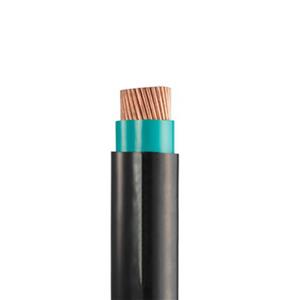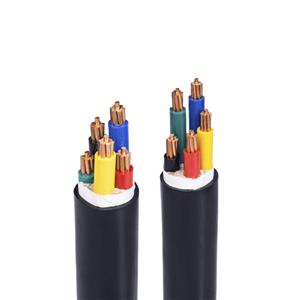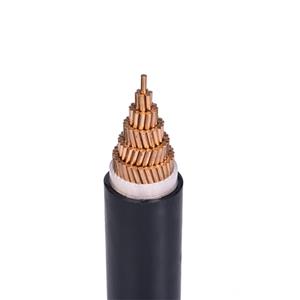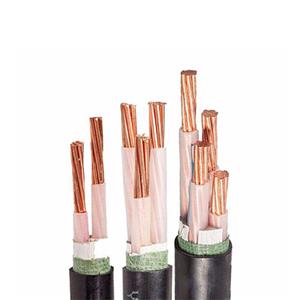
Aluminum core cables simplify wiring processes and accelerate building power construction progress.
In the world of power transmission, aluminum core cables stand out like a low-key yet formidable competitor, carving out a niche for themselves among numerous cable types and becoming a favorite for many engineering projects thanks to their unique advantages. Aluminum, an extremely abundant metallic element in the Earth's crust, is inexpensive, costing only 1/3 to 1/2 the price of copper. When made into cables, aluminum core cables, for the same specifications, have a procurement cost 30% to 50% lower than copper core cables. Choosing aluminum core cables significantly reduces initial cable procurement costs. This cost advantage drastically reduces the initial investment pressure in power transmission and makes it easier for more areas to be covered by the power grid.
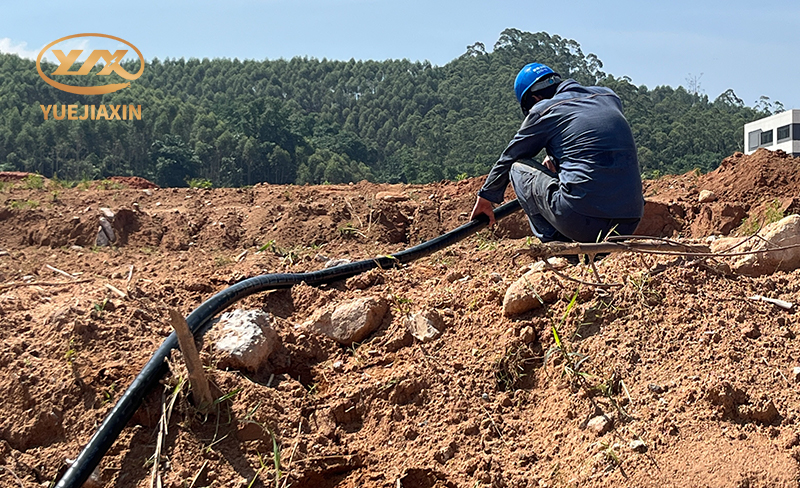
In terms of corrosion resistance, aluminum reacts rapidly with oxygen in the air, naturally forming a thin film of aluminum oxide on its surface. This film acts like an "invisible armor," giving aluminum core cables basic corrosion resistance. They can operate stably in dry environments and remain functional even in slightly humid conditions, meeting the needs of most conventional power transmission scenarios. Different environments require different types of aluminum core cables. In dry indoor environments with low protection requirements, VLV type aluminum core PVC insulated PVC sheathed power cables are sufficient—economical and practical. In humid underground environments, YJLV22 armored cables are necessary. These have polyethylene insulation, steel tape armor, and a PVC sheath, making them waterproof and pressure-resistant, reliably handling moisture and external forces. Furthermore, in environments like machine shops where equipment vibrates frequently, or where moving equipment requires repeated cable bending, aluminum core cables are less suitable because aluminum cores have limited toughness and are prone to fatigue fracture. In such scenarios, cables with higher bending resistance are more appropriate.
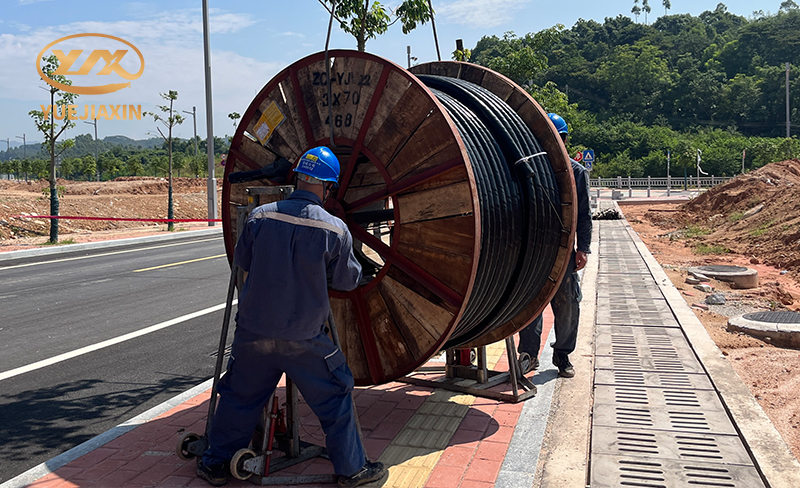
In the field of construction engineering, aluminum core cables are ubiquitous. Their lightweight advantage is evident in the installation of trunk lines in the vertical shafts of high-rise residential buildings, effectively reducing the load on cable trays and lowering construction difficulty and safety risks. From being the king of cost-effectiveness to providing scenario-based solutions, aluminum core cables have proven their strength: in balancing cost, weight, and corrosion resistance, they are the optimal solution.