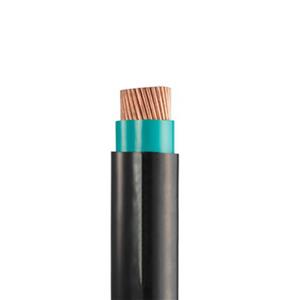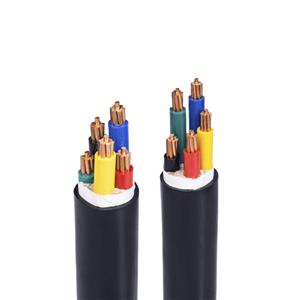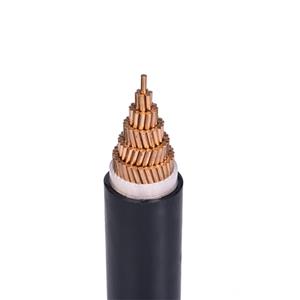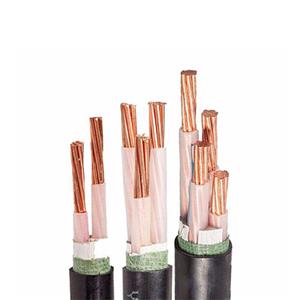
Aluminum alloy cables are deeply rooted in the industrial field, with customized solutions meeting diverse needs.
Aluminum alloy cables are experiencing rapid growth, with the market expanding at an unprecedented pace. The emergence of aluminum alloy cables has injected new vitality into the traditional power transmission field, becoming an ideal replacement for traditional copper cables. They possess the strength of metal, capable of withstanding tensile and compressive forces and ensuring stability in complex environments; they also have excellent conductivity, enabling efficient power transmission to meet the enormous electricity demands of modern society. Aluminum alloy cables are considered the "lightweight champion" in the cable industry, weighing only half that of copper cables. In long-distance laying scenarios, this makes handling easier for workers, increasing construction efficiency by approximately 30%. For the same current carrying capacity, their cross-section is only 10%-15% larger than copper cables, yet they can achieve longer laying lengths, reducing the number of intermediate joints, lowering the risk of failure, and reducing costs by up to 40%, making project budgets more controllable. By adding alloying elements such as iron and magnesium, the creep resistance of aluminum alloy cables is 300% higher than that of pure aluminum, maintaining a stable physical state even under prolonged current loads.
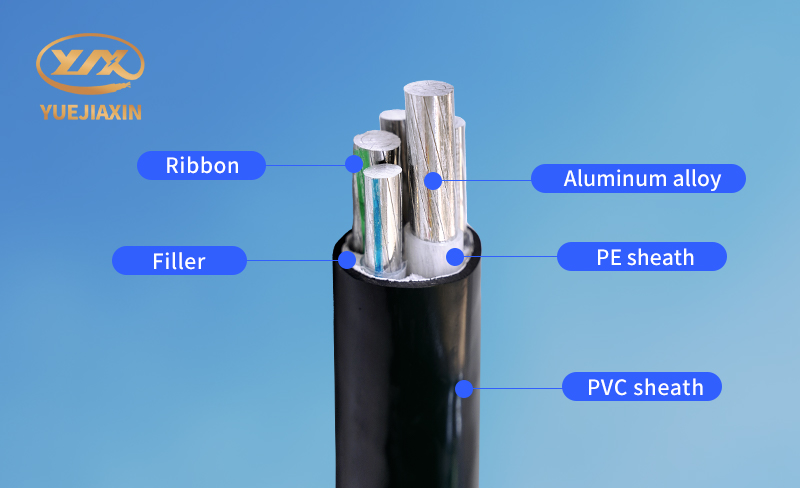
Aluminum alloy cables boast a remarkable "lightweight" advantage, with a density only one-third that of copper, essentially giving the cable a lightweight "feather coat." Under the same current-carrying capacity, its weight can be reduced by 50%. In large construction projects, cables often need to be transported to distant construction sites; the lightweight nature of aluminum alloy cables makes transportation much easier, significantly reducing transportation costs. During installation, workers no longer need to exert considerable effort to move heavy cables, greatly simplifying the installation process.Aluminum alloy cables are considered the "king of cost-effectiveness." In terms of raw material costs, they are 30%-50% lower than copper cables. Copper is relatively expensive and scarce, while aluminum alloy raw materials are widely available and more affordable. Furthermore, due to their lighter weight and easier installation, aluminum alloy cables can save 20%-40% on installation costs. In a large construction project, cable installation costs are a significant expense; the substantial savings from aluminum alloy cables undoubtedly translate into substantial cost savings for the project.Aluminum alloy cables, modified with rare earth elements, have achieved a qualitative leap in performance, especially in corrosion resistance. Their corrosion resistance is 200% higher than that of ordinary aluminum cables, meaning they can withstand various harsh environments without damage. Aluminum alloy cables also perform excellently in extreme temperature environments. Even at -40℃, they maintain their flexibility and do not become brittle or easily broken due to the low temperature.

The future of aluminum alloy cables is bright. Driven by technological innovation, they are making great strides towards performance breakthroughs, intelligent upgrades, and globalization, bringing more surprises and changes to the power transmission field. From traditional buildings to the new energy revolution, aluminum alloy cables, with their triple advantages of being lightweight, economical, and reliable, continue to rewrite the value equation of power transmission.