How to Choose Compliant Photovoltaic Cables?
In the construction of photovoltaic (PV) power plants, the selection of modules and inverters receives significant attention; however, PV cables often represent the most overlooked weak link regarding regulatory compliance. Acting as the "blood vessels" of the plant, cables perform the critical function of power transmission; thus, the compliance of their selection directly impacts safe operation, grid-connection acceptance, service life, and investment returns. Many issues—such as failure to pass acceptance inspections, subsequent fires, power output degradation, and soaring O&M costs—stem from the selection of non-standard cables, mismatched specifications, or failure to meet required standards. PV cables are categorized into DC-side and AC-side cables, each subject to distinct standards and performance requirements; the first step toward compliant selection is to clearly distinguish between these application scenarios and align with the appropriate standards to prevent misuse or incorrect application.
For domestic photovoltaic (PV) projects, regulations mandate the use of specialized PV DC cables for the DC-side connections—spanning from PV strings and combiner boxes to inverters—strictly prohibiting the substitution of ordinary wires or standard power cables. Projects destined for export or international markets must align with relevant international standards: the EN50618 standard for the European region and the IEC62930 standard for general international applications. Specialized PV cables must meet five fundamental criteria—a 1500V DC rated voltage, cross-linked polyolefin insulation and sheathing, low-smoke zero-halogen (LSZH) properties, and resistance to both UV radiation and temperature extremes—which serve as the core compliance features distinguishing them from standard cables.
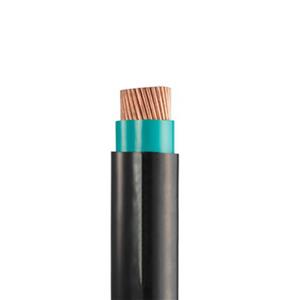
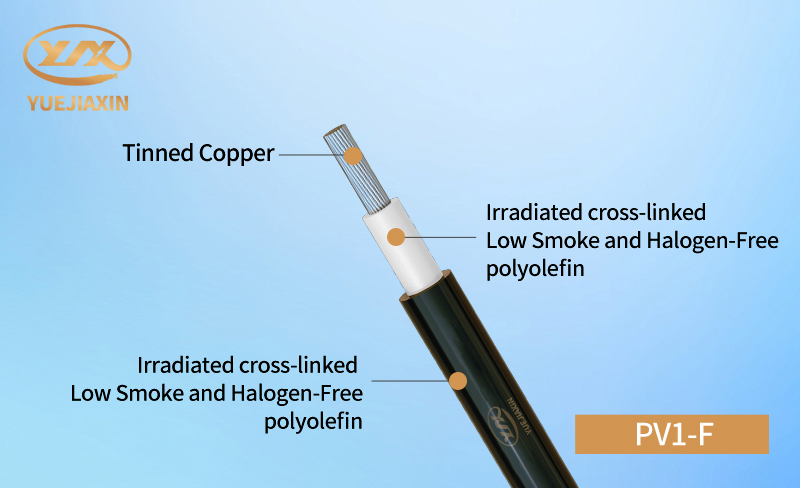
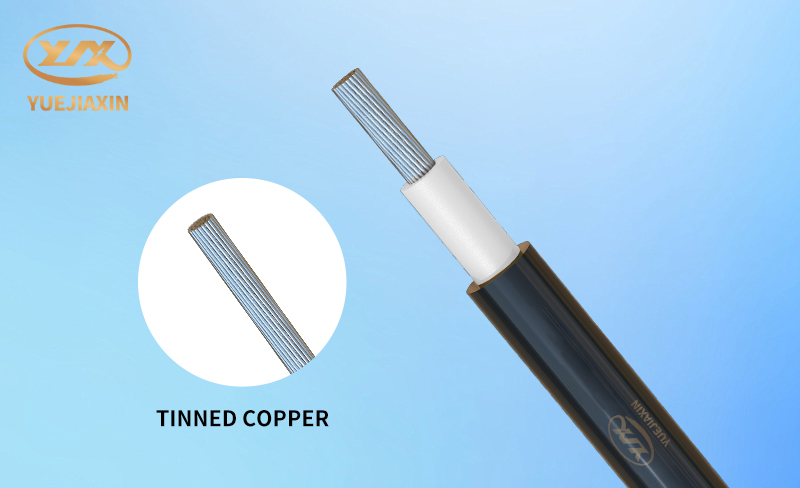
Currently, the mainstream compliant cable models for domestic PV projects are PV1-F and H1Z2Z2-K. Both models meet national and international standards and are suitable for the vast majority of residential, commercial/industrial, and ground-mounted PV power plants; non-standard products lacking specific PV markings must be avoided. The PV1-F cable fully complies with the NB/T42073 industry standard and is the most widely used compliant model for domestic PV plants; it features a flexible, tinned copper conductor (single-core) capable of withstanding a maximum long-term operating temperature of 120°C, with insulation and sheathing made of cross-linked polyolefin material that offers LSZH, flame-retardant, and aging-resistant properties. With cross-sectional areas ranging from 1.5mm² to 35mm², it is perfectly suited for DC-side wiring in residential and small-to-medium-sized commercial/industrial PV projects. The H1Z2Z2-K cable complies with both EN50618 and IEC62930 international standards, offering broader compliance applicability; with cross-sectional areas ranging from 1.5mm² to 240mm², it is suitable for large-scale ground-mounted plants, centralized PV projects, and export-oriented installations, offering superior weather resistance and more stable long-term outdoor performance. Cable cross-section selection directly determines voltage drop, current-carrying capacity, and operational safety, and is a key focus during acceptance inspections. Selecting a conductor with an inadequate cross-section not only results in continuous power generation losses but also leads to cable overheating and accelerated insulation aging due to prolonged overloading, thereby creating safety hazards.
Photovoltaic cables are typically installed outdoors and exposed to the elements; environmental factors such as temperature extremes, UV radiation, rainfall, and corrosion are critical to compliance and service life, requiring performance specifications tailored to specific application scenarios. Selecting the right compliant cable need not be complicated—simply keep these key points in mind: distinguish between AC and DC, select the correct specialized model, match the conductor cross-section to the transmission distance, ensure environmental suitability, and verify that all necessary certifications and markings are present.