How do you distinguish between the application scenarios for control cables and power cables?
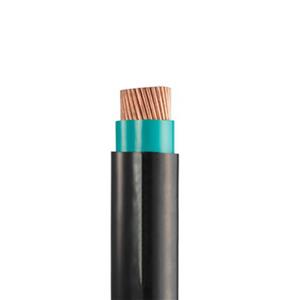
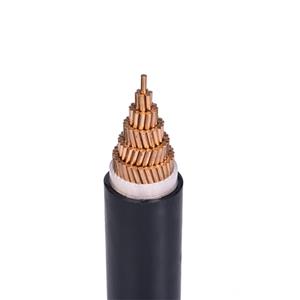
In our daily lives, we frequently encounter various types of cables, yet we often struggle to distinguish between them. Simply put, a power cable is a cable designed for the transmission and distribution of electrical energy; it carries powerful currents, conveying electricity from sources—such as power plants and substations—to every corner of a city, thereby providing the indispensable energy required for our daily lives and industrial production. Structurally, a power cable primarily consists of four components: the core (conductor), the insulation layer, the shielding layer, and the protective sheath. As the central element, the core is typically composed of highly conductive materials—such as copper or aluminum—and is responsible for transmitting electrical energy. The insulation layer, utilizing insulating materials such as cross-linked polyethylene (XLPE) or polyvinyl chloride (PVC), tightly encases the core; it electrically isolates the core from the ground and from other cores of different phases, thereby ensuring the safe transmission of electricity. The shielding layer serves to optimize the distribution of the electric field and minimize tangential stress; in the case of multi-core cables, it also enhances structural stability and mitigates electromagnetic interference. Finally, the outermost protective sheath acts like a steadfast guardian, shielding the cable from external environmental factors—such as mechanical damage and chemical corrosion—to ensure its long-term, stable operation. Power cables feature high voltage ratings—ranging from 1 kV to 1000 kV and beyond—enabling them to withstand immense voltages and facilitate long-distance, high-capacity electrical energy transmission.
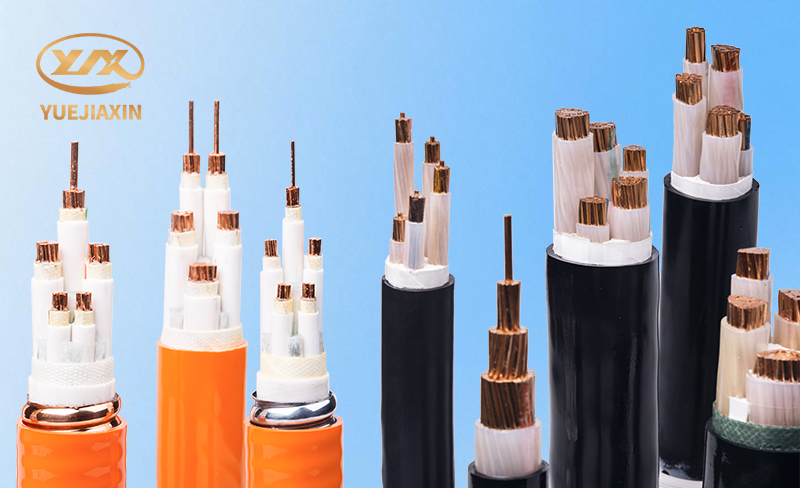
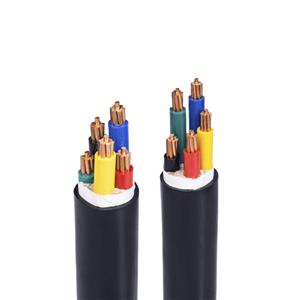
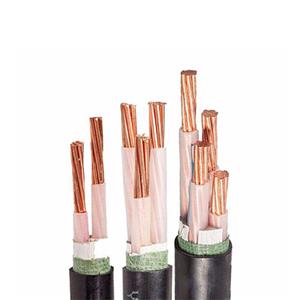
A control cable is a specialized type of cable used for transmitting control signals, measurement signals, or low-voltage electrical power. Structurally, the conductors within a control cable are typically made of high-purity copper; this choice is driven by copper's exceptional conductivity and flexibility, which ensure the stable transmission of signals. The insulation layer—composed of materials such as Polyvinyl Chloride (PVC) or Cross-Linked Polyethylene (XLPE)—tightly encases the conductors to prevent short circuits between them and to provide resistance against specific temperatures and chemical corrosion. To guard against external electromagnetic interference and ensure the accuracy of signal transmission, many control cables also incorporate a shielding layer, typically constructed from metal foil (such as aluminum foil) or woven copper mesh. The outermost sheath, made from materials like PVC or polyurethane, provides mechanical protection for the cable, enabling it to adapt to diverse environments by offering properties such as oil resistance, flame retardancy, or UV resistance. Control cables typically feature a relatively low rated voltage—commonly 450/750V—and are primarily utilized for transmitting weak control signals and low-voltage power; this function fundamentally distinguishes them from power cables, which are designed to transmit high-magnitude electrical energy. They generally employ a multi-core structure, ranging from 2 to 61 cores, allowing for the simultaneous transmission of multiple control signals to meet the complex requirements of sophisticated control systems.
In contrast, power cables span an extremely wide range of voltage levels, starting from low-voltage 1kV and extending all the way to ultra-high-voltage 500kV or even higher. In high-voltage transmission networks, power cables rated at 110kV and 220kV are commonly used to transmit electrical energy over long distances from power generation plants to urban substations. Control cables, on the other hand, typically have a much lower rated voltage—generally 450/750V or below. In a typical automated manufacturing facility, control cables are responsible for interconnecting PLCs (Programmable Logic Controllers) with various pieces of equipment to transmit control signals; in such applications, the appropriate voltage rating is 450/750V. Therefore, when faced with a specific application scenario, one can make a preliminary determination regarding the appropriate cable type by first assessing the required voltage level. If the application demands the transmission of high voltage, a power cable is undoubtedly the correct choice; conversely, if the voltage requirements are low and the cable is intended for transmitting control signals, a control cable would be the more suitable option.
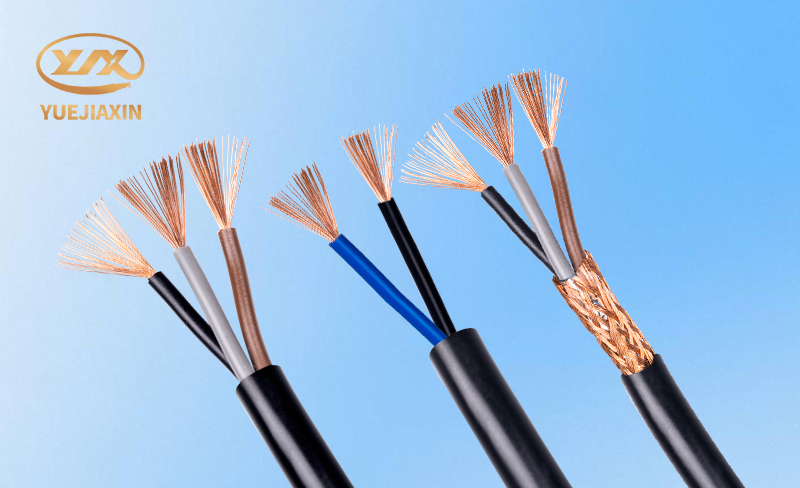
The distinction between control cables and power cables, in terms of their applicable scenarios, can primarily be analyzed based on factors such as voltage rating, current magnitude, the type of signals transmitted, and the operating environment. Power cables feature high voltage ratings and transmit large currents; they are primarily utilized for the transmission of electrical energy and are suited for applications in power plants, substations, building power supply systems, and similar settings, where they are capable of operating stably even in complex environments. Control cables, conversely, possess lower voltage ratings and transmit smaller currents, serving primarily to transmit control signals. They are commonly found in industrial automation production lines, intelligent building control systems, transportation signaling networks, and similar contexts—environments that are relatively stable and where greater emphasis is placed on flexibility and resistance to electromagnetic interference.