How do you choose electrical wires for home renovation?
Electrical wires are like the blood vessels of the human body; they shoulder the vital responsibility of transmitting electricity and keeping household appliances running smoothly. Selecting the right wiring for home renovation is a crucial step in ensuring electrical safety and enhancing your quality of life. Let’s take a closer look at how to choose high-quality, suitable wiring for your home.
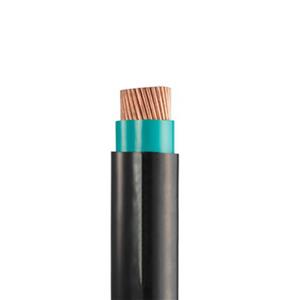
When it comes to selecting home wiring, determining the type is the first critical step. The two most common types of residential wiring on the market are "hard" (solid-core) wire and "soft" (stranded) wire; each has distinct characteristics regarding structure, performance, and application. Let’s explore them in detail. Hard wire—technically known as PVC-insulated copper wire (or "BV wire")—has a relatively simple structure consisting of a single, thick copper strand. This design offers numerous advantages, making it an ideal choice for fixed household wiring. Because it is a single solid strand, the wire is structurally stable; it retains its shape after being pulled through conduits and is resistant to shifting caused by external forces or thermal expansion and contraction. Additionally, hard wire boasts excellent wear resistance, effectively withstanding friction and corrosion in long-term installations (such as inside walls) to ensure a long service life. Furthermore, the single-strand design offers reliable connectivity; when connected to switch/socket panels or terminal blocks, it provides a large, stable contact area. Provided the connection is crimped securely, issues like loosening, oxidation, or poor contact are unlikely to occur, thereby significantly reducing safety hazards caused by faulty connections. Given these benefits, hard wire is widely used for fixed, in-wall wiring in home renovations. Household socket and switch circuits are the primary domains for hard wire. Main lines running from the distribution box to deliver power to sockets and switches across various rooms are fixed in place and do not require frequent movement; here, hard wire leverages its stability and reliability to ensure a steady power supply for daily use.
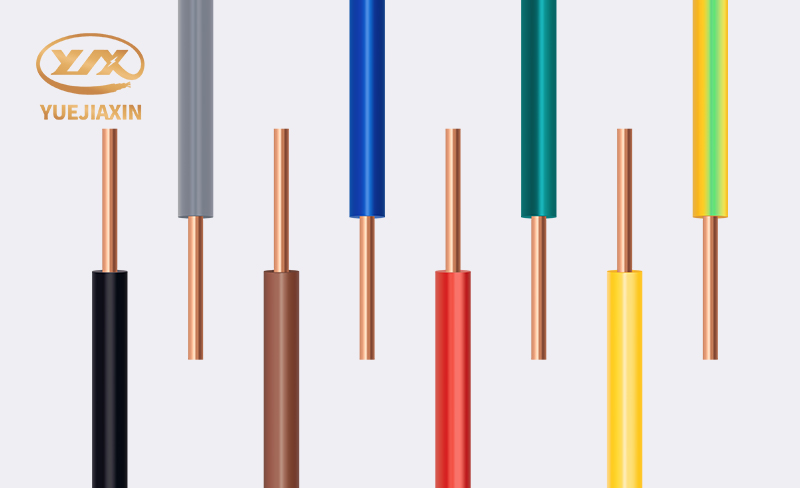
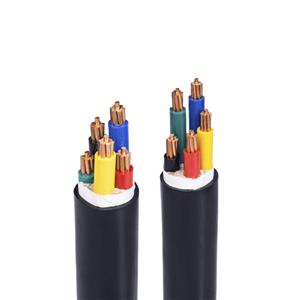
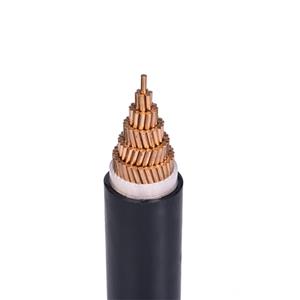
Unlike solid-core wire, flexible wire (such as BVR cable) features a more intricate structure; it is composed of multiple fine copper strands twisted together, forming a pliable yet resilient whole. This unique construction grants the wire exceptional flexibility, allowing it to bend and shape easily to accommodate complex wiring environments. Its flexibility makes it ideal for applications such as lighting installation and electrical appliance connections. Furthermore, flexible wire is well-suited for devices requiring frequent plugging, unplugging, or relocation; it withstands repeated bending without damaging the internal copper strands, thereby ensuring the appliance's reliable operation.
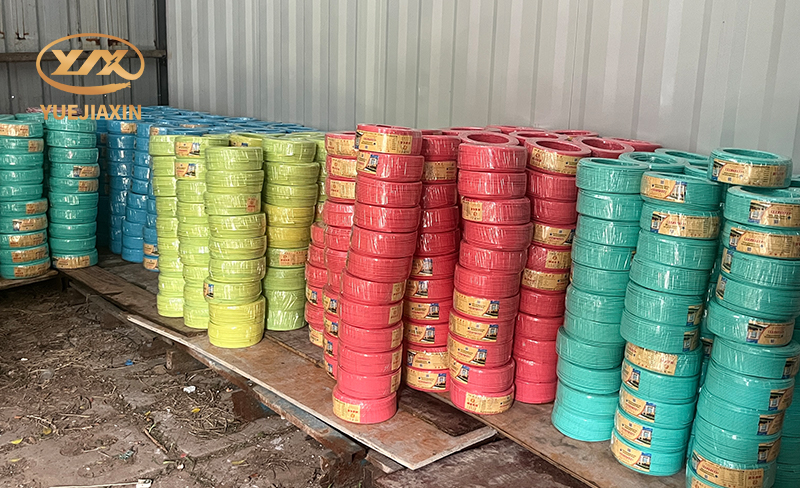
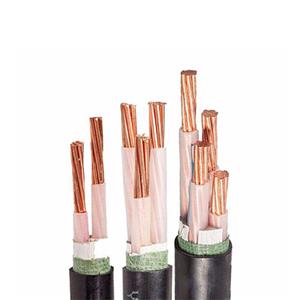
Once the type and specifications of home wiring have been determined, the next step is to learn how to distinguish between high- and low-quality wires. Here, a direct cable manufacturer explains how to assess wire quality by focusing on two key components: the copper core and the insulation layer. As the "heart" of the wire, the copper core directly determines its electrical conductivity and service life. A high-quality core is made of high-purity oxygen-free copper; this material boasts exceptional purity and minimal impurity content, resulting in outstanding conductivity and stability. Visually, a high-quality copper core displays a vibrant reddish-purple hue with uniform color and a lustrous finish. The insulation layer tightly encases the copper core, serving the vital functions of electrical insulation, flame retardancy, and physical protection. Polyvinyl chloride (PVC) is a common insulation material on the market; it offers excellent insulating properties and flexibility at a relatively low cost, making it a standard choice for home wiring. High-quality PVC insulation features uniform thickness; when touched, the thickness feels consistent throughout, with no areas that are excessively thick or thin.