Aluminum alloy cables, lightweight & excellent conductivity
As the "arteries" of power transmission, cables bear the critical responsibility of conveying electrical energy from power stations to households far and wide. However, traditional cables—particularly those utilizing copper as their primary conductor material—are currently confronting numerous challenges regarding both cost and performance. From a cost perspective, copper—a vital non-ferrous metal—has consistently commanded high market prices subject to frequent fluctuations. This volatility makes it difficult to control cable manufacturing costs; for large-scale power engineering projects, the exorbitant cost of cable procurement undoubtedly constitutes a heavy financial burden. Furthermore, the complex manufacturing processes and high energy consumption associated with traditional cables serve to further inflate their overall lifecycle costs.
In terms of performance, traditional cables also exhibit certain limitations. For instance, their substantial weight significantly increases both construction difficulty and safety risks in scenarios requiring long-distance laying or overhead installation. Moreover, traditional cables often lack sufficient flexibility, making it difficult to bend them agilely within complex wiring environments—a constraint that ultimately limits their scope of application. Amidst the various predicaments facing traditional cables, aluminum alloy cables have emerged like a brilliant new star, illuminating a fresh direction for the field of power transmission.
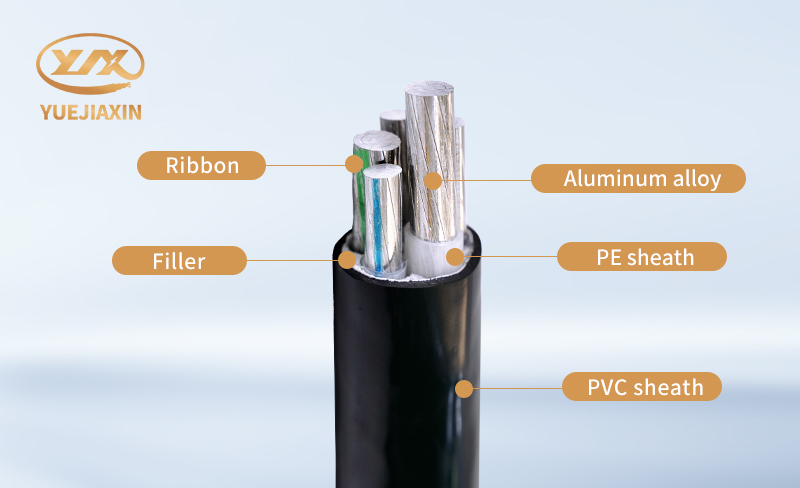
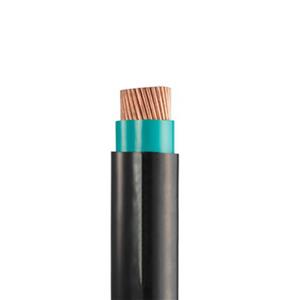
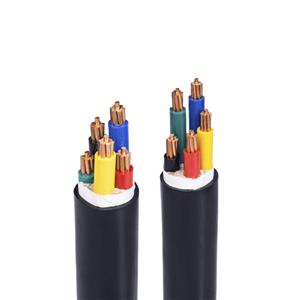
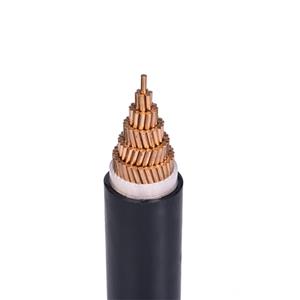
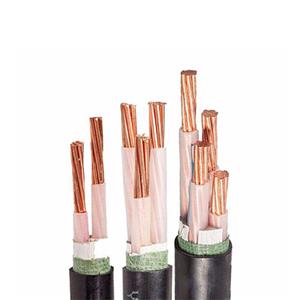
Aluminum alloy cable is a type of power cable that utilizes aluminum alloy material as its conductor. Structurally, an aluminum alloy cable primarily consists of three components: the conductor, the insulation layer, and the protective sheath. The conductor is fabricated from high-purity aluminum alloy material and processed through a specialized stranding technique to form a multi-strand structure. This structural configuration endows the cable with excellent flexibility; whether navigating through narrow conduits or routing within complex architectural structures, it handles the task with ease, thereby significantly reducing construction difficulty. Simultaneously, the multi-strand design enhances the mechanical strength of the conductor, mitigating the risk of conductor breakage caused by external forces. Common materials used for the insulation layer of aluminum alloy cables include cross-linked polyethylene (XLPE) and polyvinyl chloride (PVC).
Serving as the cable's "armor," the protective sheath—comprising both an inner sheath and an outer sheath—is primarily responsible for shielding the cable's internal structure from external mechanical damage, chemical corrosion, and moisture ingress. The inner sheath, typically composed of PVC or polyethylene, tightly encases the insulation layer to provide initial sealing and protection. The outer sheath, conversely, offers a variety of options tailored to specific operating environments and requirements, including steel tape armor, steel wire armor, PVC outer jackets, and low-smoke zero-halogen (LSZH) outer jackets. In terms of material costs, copper—being a relatively scarce resource—has consistently commanded high prices subject to frequent fluctuations. Aluminum, on the other hand, boasts abundant reserves and a relatively stable, affordable price point—typically hovering at only about one-quarter the cost of copper. This inherent cost advantage in raw material procurement gives aluminum alloy cables a distinct competitive edge.
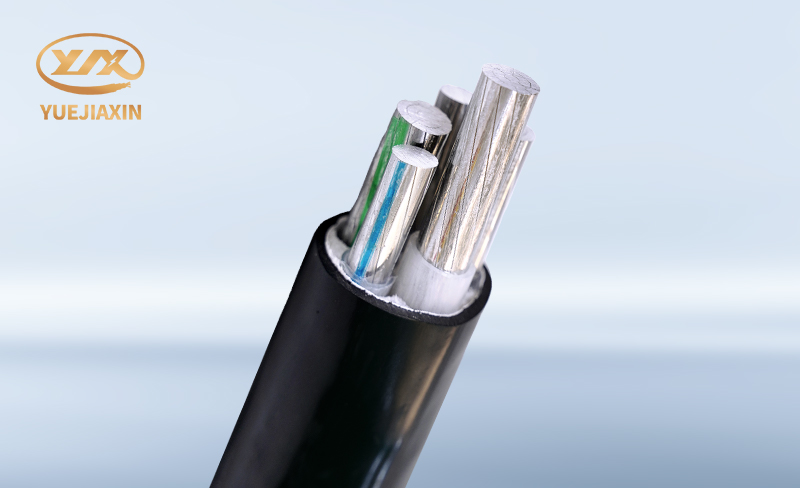
As a rising star in the field of power transmission, aluminum alloy cable is gradually reshaping the landscape of our electricity infrastructure, thanks to its cost advantages, exceptional performance, and wide range of applications. Looking ahead, driven by continuous technological innovation and advancement, the performance of aluminum alloy cables is set to improve even further, while their costs are expected to decrease. We are confident that in the near future, aluminum alloy cables will find applications in an even broader array of sectors, bringing greater convenience and new possibilities to our lives. If you are currently planning a power engineering project, we invite you to consider selecting aluminum alloy cables; let them serve as a reliable asset for your power transmission needs, as we work together to build an efficient, economical, and secure power transmission system.