Surging Market Demand for Multi-Core Flexible Cables! Technological Innovation Drives High-Quality Industry Development
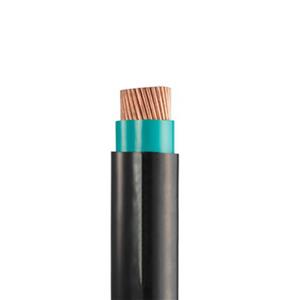
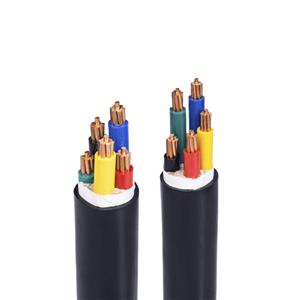
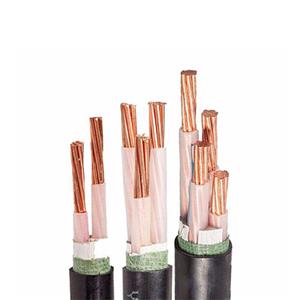
Multi-core flexible cables, simply put, are cables composed of multiple insulated cores, much like combining multiple "small wires" into a strong "wire bundle." The number of these insulated cores is not fixed; common configurations include two, three, four, and five cores. Structurally, each core of a multi-core flexible cable is wrapped in an insulation layer. This insulation layer acts like an insulating protective suit, effectively preventing current from "running around," avoiding leakage accidents, and ensuring electrical safety. Common insulation materials include polyvinyl chloride (PVC) and cross-linked polyethylene, both of which have excellent insulation properties. On the outermost layer, the multi-core flexible cable is also encased in a sheath. This sheath provides mechanical protection, preventing scratches and abrasions during installation and use; it also provides moisture and water resistance, so even in humid environments, the internal cores are unaffected. Sheath materials typically include polyvinyl chloride (PVC) and low-smoke halogen-free (LSZH) materials. The sheath, made of low-smoke halogen-free materials, produces minimal smoke and toxic halogens during combustion, making it more environmentally friendly and health-conscious. It is commonly used in environments with high safety requirements.
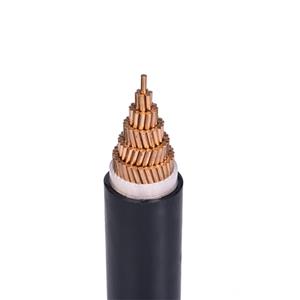
One of the biggest advantages of multi-core flexible cables is their exceptional flexibility. Because the core is composed of multiple strands of fine copper wire, it can be easily and flexibly bent during wiring, perfectly adapting to various complex environments. Multi-core flexible cables exhibit extremely high stability when transmitting power and signals. This is mainly due to their structural design and high-quality materials. Each core has a good insulation layer, effectively reducing signal interference and loss. In the field of data transmission, with the rapid development of information technology, the requirements for data transmission speed and stability are increasingly higher. Multi-core flexible cables can meet the needs of high-speed data transmission, ensuring accurate data transmission.
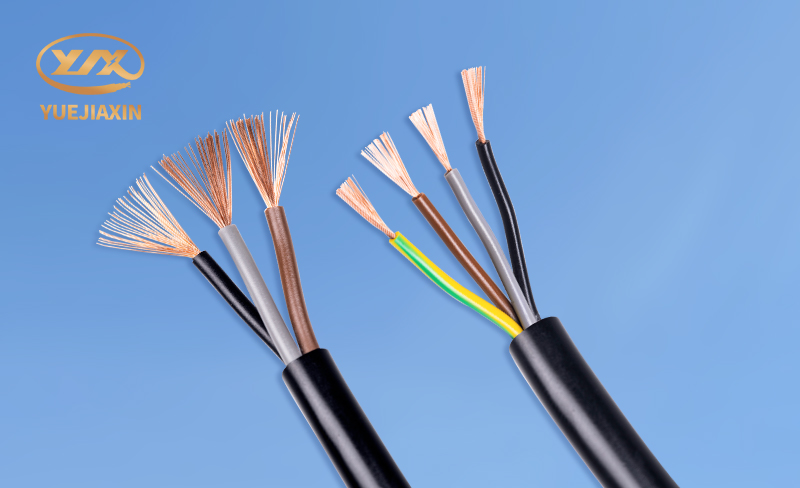
In the market, common multi-core flexible cables include RVV and KVVR, each with its own unique meaning, representing its specific characteristics and applications. RVV cable stands for copper core PVC insulated PVC sheathed flexible cable. The "R" indicates flexibility, signifying its excellent toughness; the "V" stands for PVC, appearing twice to indicate that both the insulation and sheath layers are made of PVC. RVV cables typically consist of multiple stranded copper wires, a PVC insulation layer, filler material, and a PVC sheath. They are highly flexible, easily adapting to various complex wiring environments, and are also corrosion-resistant and possess a certain degree of flame retardancy.
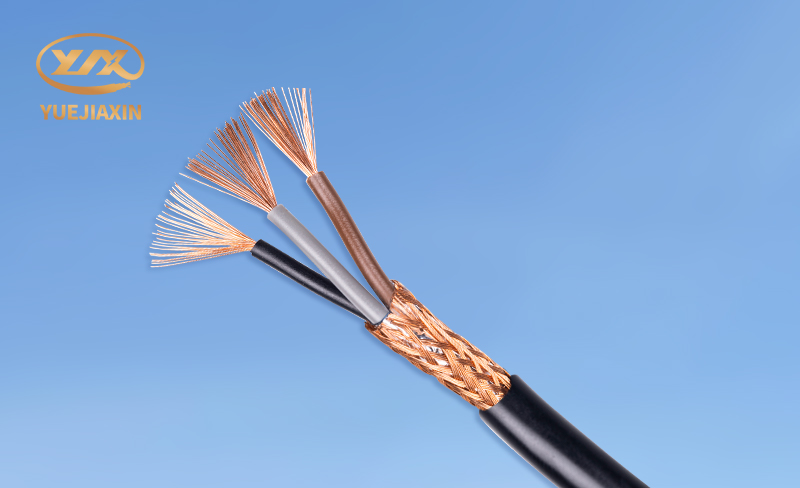
When selecting multi-core flexible cables, clearly defining the intended use is paramount. Quality is the lifeline of multi-core flexible cables; therefore, choosing cables that meet national standards and have quality certifications (such as CCC certification) is crucial. CCC certification is China's mandatory product certification system. Multi-core flexible cables that have passed CCC certification mean that they meet national standards in terms of safety and electrical performance, providing reliable assurance for our use.