How to Choose Cables for Different Scenarios? Understanding the Differences Between Home Improvement, Engineering, and Export Cables in One Article
While all fall under the category of electric wires and cables, different applications—such as residential lighting or industrial power distribution—impose entirely different requirements and criteria for evaluation. In a residential setting, where voltage and electrical loads are relatively low, the primary concern is not "how much power it can carry," but rather "long-term, trouble-free operation." Consequently, when selecting wires for home renovation, safety is always the top priority.
Regarding wire types: "BV" refers to single-core solid wire; it is the preferred choice for in-wall wiring (run through conduits) due to its durability and long service life. "BVR" is a multi-strand flexible wire; it is easier to install in surface-mounted configurations or in tight spaces with many bends, making it ideal for use in distribution boxes or for connecting light fixtures. "RV" flexible wire is typically used for control circuits and internal wiring within electrical equipment.
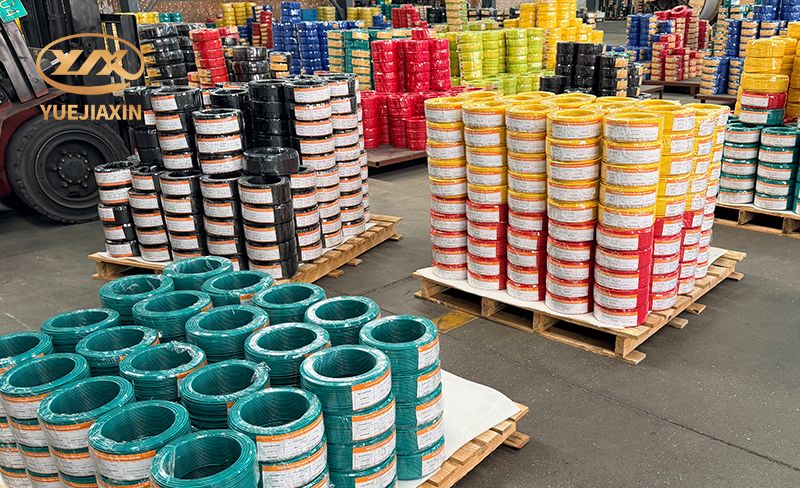
How should you choose between single-core solid wire and multi-strand flexible wire? In short: for concealed wiring (inside conduits), opt for solid (BV) wire—it ensures secure crimping and simplifies installation. For surface-mounted wiring, runs with many bends, or areas like distribution boxes with densely packed terminals, flexible (BVR) wire is more versatile and easier to connect. The correct approach is to first determine the circuit's purpose, then select the appropriate wire gauge (cross-sectional area), and finally verify fire-retardant ratings and certifications—never reverse this order.
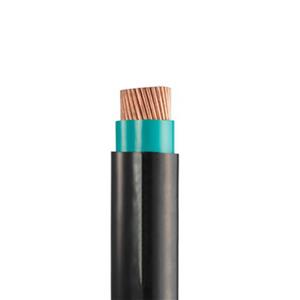
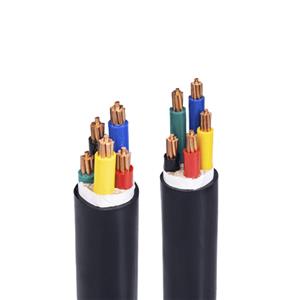
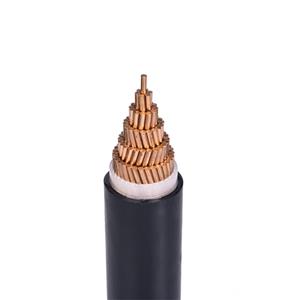
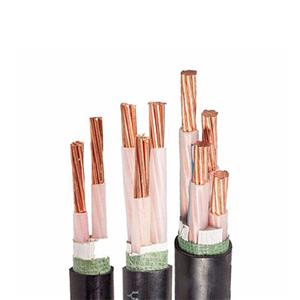
In engineering and industrial settings, where voltage levels are higher, loads are heavier, and installation environments are complex, the focus shifts to a cable's current-carrying capacity and resistance to mechanical damage—a completely different logic compared to residential wiring. The primary cable type used in these sectors is YJV (copper-core, cross-linked polyethylene-insulated, PVC-sheathed power cable), which is suitable for indoor cable trays, surface mounting, and conduit runs. YJV22, which features steel-tape armoring and a dual-layer sheath, offers superior tensile and compressive strength, making it ideal for direct burial or environments subject to external pressure. Aluminum-core YJLV cables offer a lower-cost alternative for budget-sensitive projects. The key distinction is that YJV is unarmored, more flexible, and less expensive, but offers virtually no mechanical protection; in contrast, YJV22 includes an inner sheath and steel-tape armoring, providing significantly better resistance to tension and compression.
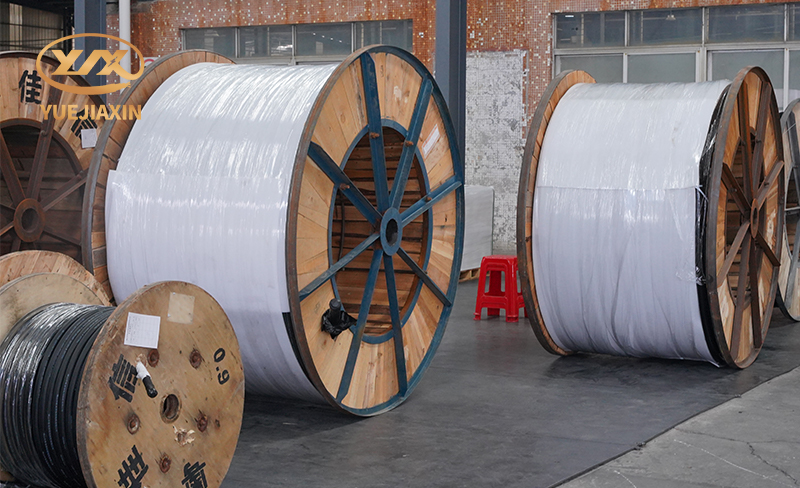
Whether for residential lighting or industrial/commercial projects, you should select the appropriate wires and cables based on the specific application. If you are unsure, simply provide us with details regarding the usage scenario, voltage rating, installation method, and target market. Our professional engineers are ready to assist you—relying on experts to make these technical decisions is often a much safer approach than trying to figure it out on your own.